Dordogne is one of France’s most castle-rich regions, where medieval fortresses, Renaissance residences and dramatic river-top strongholds punctuate a landscape shaped by centuries of conflict, culture and craftsmanship. Following the sinuous Dordogne River and its tributaries, travellers encounter stone silhouettes rising above villages, forests and valleys — each château telling a different chapter of history. This article highlights 10 notable castles featured along Intura’s walking and cycling routes in this beautiful region of France, offering practical insights into what to see, when to go and how to visit as well as special events that bring these historic places to life.
1. Château de Belcayre – St Léon sur Vézère
Location: Château de Belcayre is perched approximately 20 metres above the Vézère River in a peaceful rural setting, surrounded by rolling countryside typical of inland Dordogne, away from the busiest river corridors.
Historical significance: Built during the late medieval period, the château evolved over centuries as a private residence rather than a military stronghold. It reflects the quieter noble life of the region, shaped by local landowners rather than royal ambition. Evidence of burned stones suggest that the chateau suffered major damage during the Hundred Years’ War.
Highlights: The architecture blends fortified elements with residential charm, including stone façades, interior salons and landscaped grounds, a drawbridge and a 12th century lookout tower.
Visitor experience: The castle is privately owned and not open to the public but very visible from the road and river.
2. Château de Fayrac – Castelnaud la Chapelle
Location: Perched dramatically above the Dordogne Valley, Château de Fayrac commands attention with its towers rising sharply from wooded slopes.
Historical significance: The castle once played a role in regional defense, forming part of a network of lookout points during feudal conflicts and the Hundred Years’ War, supporting Castelnaud (English side) against Beynac (French side).
Highlights: Tall towers, crenellated battlements and commanding panoramic views across the river valley make it visually striking.
Visitor experience: Fayrac remains privately owned and is not open to the public. Excellent photo opportunities can be found from nearby walking paths and viewpoints, particularly in early morning or late afternoon light.
3. Château de Marqueyssac
Location: Located in Vézac in the heat of the Périgord Noir, perched on a rocky spur approximately 130 metres above the Dordogne River, Marqueyssac boasts panoramic views of the nearby castles of Beynac and Castelnaud.
Historical significance: Built during the 17th century, the gardens were developed in the 19th century, inspired by Italian landscaping traditions. After WWII, the gardens fell into decline but were then restored and open to the public in 1997. The castle is listed as a ‘Historic Monument’ and the gardens labelled ‘Jardin Remarquable’, a prestigious title.
Highlights: Marqueyssac is world-famous for its hanging gardens, and one of the most specatuclar in France, where over 150,000 hand-sculpted boxwoods form flowing patterns above the Dordogne River.
Visitor experience: The gardens offer 6km of shaded walking trails, beautiful cliff-edge viewpoints, a café, boutique, children’s play areas, and seasonal candlelit evenings and night events enhance the experience.
4. Château de Fages – St Cyprien
Location: The castle sits on an ancient Gallo-Roman oppidum, above St Cyprien offering beautiful views of the Périgord landscape.
Historical significance: It appears to have been constructed during the 13th century and rebuilt in the late 16th century. It played an important role during the War of Religion, its compact layout, defensive walls and simple stone construction reflect its practical origins, however the castle came under severe attack many times. It became home to various noble families, abandoned during the 19th century and then used as a tobacco drying facility in the 20th century. Modern restauration began in 1964.
Highlights: Admire the two large Renaissance pavilions linked by a central building and Gothic remnants, including an original medieval chimney and the rib‑vaulted chapel with a funerary chamber underneath.
Visitor experience: The castle is privately owned, but visitors can enjoy guided tours led by the owners and enjoy tales of regional legends passed down through generations. Open seasonally to visitors. Occasional cultural gatherings and heritage days are hosted during peak season.
5. Château de Commarque
Location: the castle is located in a secluded area near the village of Les Eyzies. The access by woodland trails have earned its nickname; the forgotten fortress. It is one of the most atmospheric and historically rich sites in the Périgord Noir region.
Historical significance: Founded in the 12th century by the Abotts of Sarlat, it was a simple wooden watchtower to secure major trade routes. Overtime, the castle was shared between noble families who each added fortified dwellings. The castle endured Hundred Years’ War tensions followed by gradual abandonment and decline during the 17th century and then fell into ruins. The site was rediscovered in 1962-1968 by Hubert de Commarque, a descendant of the original family. With help from the state and internation foundations, he undertook the restauration project, making Commarque on of the best-documented medieval sites in the Dordogne, combining history, archaeology and nature so seamlessly.
Highlights: Tower ruins, medieval pathways, hidden staircases and wildlife-rich surroundings create a sense of discovery.
Visitor experience: Open from spring to autumn, you can enjoy self-guided or guided tours and seasonal events such as archery, calligraphy & stone carving workshops. Light shows and themed medieval events animate the castle during summer.
6. Château de Puymartin
Location: The castle is located in the commune of Marquay, between Sarlat and Les Eyzies.
Historical significance: Originally built around 1269 as a strategic fortress, it was captured and looted by English mercenaries during a truce in the Hundred Years’ war. Puymartin is famous for its ghost legends, most notably the tale of the “White Lady,” who haunts the corridors at night, adding mystery to its refined elegance.
Highlights: A unique 17th‑century room decorated with grisaille paintings inspired by Greek mythology, tapestries, painted ceilings and period décor showcase aristocratic life. Enjoy the terraced gardens and surrounding woodland that provide tranquil walking trails.
Visitor experience: Open seasonally, with regular daytime visits from April through September and extended holiday openings through early January. Guided tours are highly recommended to fully appreciate the stories and interiors. The castle also hosts storytelling evenings and special exhibitions.
7. Château de Castelnaud
Location: Located in Castelnaud-la-Chapelle in the Périgord Noir, it stands on a rocky spur facing the Chateau de Beynac, offering widespread views over the Dordogne Valley.
Historical significance: At the time of the Hundred Years War, the castle belonged to the Caumont family who sided with the English but changed hands many times and allegiances shifted. It was sold as national property during the French Revolution and fell into ruin. Restorations began in 1960 and by 1980, the castle was classified as a Monument Historique. Today it houses an outstanding museum of medieval warfare, featuring siege engines, armor and weapons.
Highlights: The castle is an exceptional example of medieval military architecture, with artillery towers, and the rooms and ramparts reveal the evolution of defense and siege technologies over centuries.
Visitor experience: Since 1985, the Château de Castelnaud has hosted the Museum of the War in the Middle Ages, featuring life-size siege engines and a large collection of weapons, armor and crossbows. From its ramparts, visitors enjoy one of the most unforgettable vistas in the region. Open every day, all year round, the castle offers interactive displays and reconstructions to engage visitors of all ages.
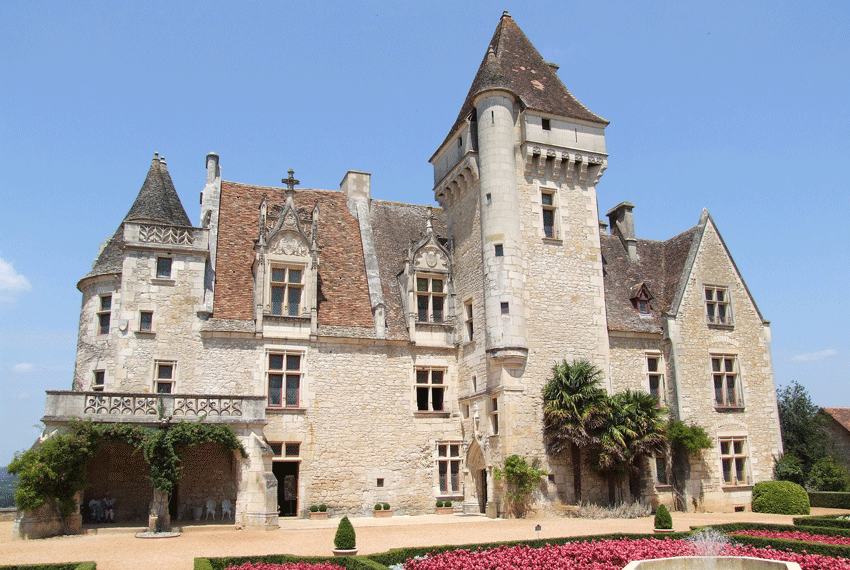
8. Château des Milandes
Location: This famous castle is located in Castelnaud-la-Chapelle, overlooking the Dordogne River from a rocky height approx. 50metres above the valley.
Historical significance: Built in 1489 in a Renaissance architectural style with gothic elements featuring fine turrets, mullioned windows, sculpted stone details, and winding staircases. A Formal French garden was laid out in 1908.
Highlights: The former home of Josephine Baker, where she raised her “rainbow tribe’ of 12 adopted children. She used the castle as a place to support the French Resistance, with coded messages hidden in the musical scores and sheltering people in danger.
Visitor experience: Today, the château celebrates her legacy of art, activism and humanitarianism with rooms displaying her costumes, memorabilia, documents, and awards. Milandes is also known for its falconry shows and family friendly activities.
9. Château de Beynac
Location: Towering 150metres above both river and surroundings, the Chateau de Beynac, located in the town of the same name, is one of Dordogne’s most photographed castles.
Historical significance: Beynac is a monumental 12th century fortress that was a French stronghold, while its rival, chateau de Castelnaud sided with the English, the Dordogne River acted as a political frontier between the two. The castle was abandoned in the 19th century, with restoration beginning in 1962.
Highlights: Beynac castle boasts remarkably preserved medieval architecture, including massive square Romanesque keep, double defensive walls and double barbican, a 15th century Great Hall and a gothic chapel. Views from its terraces define the classic Dordogne postcard image.
Visitor experience: The views from its terraces define the classic Dordogne postcard image. You can enjoy guided and self-guided tours, medieval workshops, historical reenactments and themed tours.
10. Château de la Malatrie – La Roque Gageac
Location: This privately owned Renaissance-style castle is near the village of La Roque Gageac, in the small commune of Vézac, and set dramatically at the foot of towering cliffs and overlooking the river.
Historical significance: The site dates back to the 12th century, when it was used as a leper hospital, known as maladerie, hence the name. Two 16th‑century “maladreries” (associated houses from the former hospital complex) still exist beside the château today. The site was transformed into a chateau in the late 19th century.
Highlights: Smaller and quieter than its neighbors, Malatrie offers a peaceful, intimate atmosphere, with over 2 hectares of landscaped gardens & panoramic views.
Visitor experience: the chateau is not open to the public, but available to rent as a holiday home, with 9 bedrooms and 7 bathrooms and a south-facing pool! You can admire it from the road and river.
From grand military fortresses to elegant garden estates, Dordogne’s castles reflect an extraordinary range of architectural styles, stories and landscapes. Whether you are drawn to dramatic cliff-top views, fairy-tale gardens or intimate rural strongholds, these châteaux offer unforgettable journeys through time. Exploring them along Intura’s curated walking and cycling routes allows travellers to experience Dordogne at a human pace, connecting history, nature and local culture. Before your visit, be sure to check each château’s official website for current opening times, events and ticket information — then step into one of France’s most captivating historical landscapes.