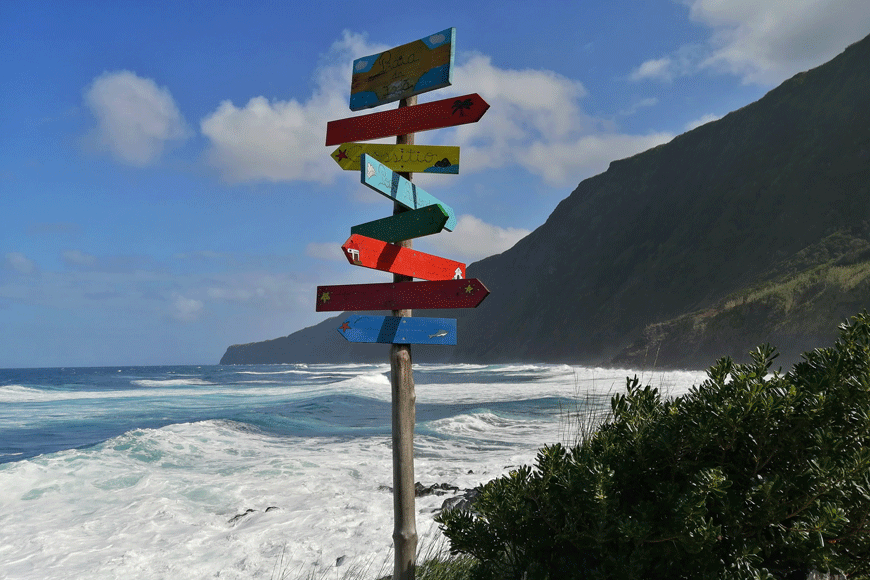
Nestled in the heart of the Atlantic Ocean, the Azores archipelago beckons travelers with its stunning landscapes, rich cultural heritage, and unique ecosystems. Whether you're an adventure seeker, a nature lover, or someone yearning for tranquility, the Azores offers something for everyone throughout the year. In this comprehensive guide, we'll take you through each season, unveiling the distinct charm, weather patterns, and activities that make every visit to the Azores unforgettable. From the vibrant flora of spring, tranquil beaches of summer, lush greenery of fall, to the serene beauty of winter, we'll help you find the best time to visit the Azores Islands and experience the magic of this archipolego.
Why timing matters when visiting the Azores?
The seasons in the Azores can significantly impact what you experience when visiting the islands. Here's how each season can influence your trip:
What to do in the Azores in Spring (March to May)
Spring is marked by mild temperatures and occasional rain showers, with an average temperature ranging from 13°C to 18°C (55°F to 64°F), ideal for hiking and exploring the natural beauty. The islands come to life with vibrant flowers and lush vegetation such as the blue hydrangeas on Faial Island. Spring is also a great time for bird watching, as many migratory birds pass through the islands.
Azores summer travel (June to August)
Expect warm and dry conditions. Temperatures can rise to 24°C to 28°C (75°F to 82°F). This is peak tourist season, perfect for enjoying the beaches and water sports like diving, snorkeling, and whale watching and summer festivals and outdoor concerts offer a taste of local culture and traditions.
Autumn in the Azores (September to November)
Temperate conditions prevail, with temperatures slowly decreasing from the summer highs, averaging between 14°C and 23°C (57°F to 73°F) and storms begin on the western islands. Autumn is great for wine tours, as it's harvest season. It's also a quieter time for hiking and exploring the islands without the summer crowds.
The Azores in winter (December to February)
Winters are mild but can be wet and windy. Average temperatures range from 11°C to 17°C (52°F to 63°F). This is the best time for spa retreats and enjoying the island’s hot springs. It's a quiet period for indoor cultural activities and museum visits. Though it's off-season, the serene landscapes and fewer tourists offer an intimate experience with nature.
Weather in the Azores: what to expect throughout the year
The Azores have a subtropical oceanic (temperate maritime) climate, mild year-round with moderate seasonality. The Azores are cooler than mainland Portugal in summer and warmer in winter, with the highest recorded coastal temperature at 32 °C and the lowest rarely under 2–4 °C. The average sea temperature is 16–17 °C in winter and 23–24 °C in summer.
Azores climate:
Winter (Dec–Feb): daytime between 12–15 °C (54–59 °F), nighttime between 10–13 °C (50–55 °F).
Summer (Jun–Aug): daytime between 20–24 °C (68–75 °F), nighttime between 18–20 °C (64–68 °F)
On average, the Azores have 127 rainy days per year and 238 dry days, with the highest rainfall between January and March, and the lowest between July & August. The wind is most blustery between October to March, with an average of 20-26km/h and gusts up to 30-40km/h during storms. It is gentlest from June to August, between 10-13km/h.
The Azores archipelago shows notable microclimate diversity, even within individual islands, driven by topography, exposure to Atlantic winds, elevation, and island group position. All islands see wet winters (Dec–Feb) and dry summers and the seasonality is similar across islands, but intensity and stability differ.
The Eastern islands (Sao Miguel & Santa Maria) are warmer and drier. The western islands (Flores, Corvo, Faial, Pico, Sao Jorge & Terceira) tend to be cooler with more wind exposure as the peaks intercept Atlantic systems, stronger gusts and showers. Flores and Corvo are more storm prone than the others. Mount Pico (2350 m) can have snow in winter and early spring, and the summit is much colder than on the coast.
Azores month-by-month travel guide
January to March: peaceful landscapes & cheaper prices
Below is a brief overview of the Azores weather month by month, starting in winter. January to March is considered the off-season yet the Azores shine with lush beauty, peaceful trails, thermal baths, and whale sightings. While weather may be unpredictable, you can expect four seasons in one day, with showers quickly followed by sun, it adds to the dramatic scenery. You can admire lush landscapes and waterfalls, especially after the winter rain. You can expect great value on flights and lower prices on accommodation, and fewer crowds make it a uniquely rewarding time to visit as locals outnumber the tourists.
São Miguel, Terceira, Pico & Faial are accessible islands as they have year-round ferry / flight schedules. Emblematic hikes such as Sete Cidades, Lagoa do Fogo, Caldeira do Faial are open and with fewer crowds. Cozy geothermal experiences and Cozido lunches by hot springs are the perfect recipe for cool, misty days.
April to June: whale watching & blossoming nature
Springtime in the Azores offers perfect mild weather for hiking, (indeed, the ascent of Pico is ideal between May and June), vibrant landscapes, and seasonal wildlife. Free from the summer throngs with fewer tourists, restaurants are open and local festivals underway so you can expect a rich adventure. We think that this is one of the best times to visit the Azores as spring also marks a floral explosion on the archipelago. Blue hydrangeas emerge in April-May, peaking in June and you can admire vividly colorful azaleas, blooming wildflowers and lush, vivid landscapes. Light breezes and calmer seas by May–June make for excellent conditions for whale watching in the Azores, and this activity comes highly recommended during spring. April–May are prime months for blue, fin, sei, humpback, pilot whales, whilst in late May-June, Atlantic spotted dolphins arrive.
July to September: peak season & festival vibes
During high season, the Azores climate is at its warmest and driest, making it ideal for outdoor and water-based activities and perfect conditions for beach lovers. Natural swimming pools and sandy beaches (Praia Formosa on Santa Maria) are at their best and sea temperatures reach 22–24 °C, ideal for long swims. Calm seas make boat tours smooth and scenic and summer brings large pods of dolphins and resident sperm whales to the waters surrounding the Azores. Despite the heat, there are some great walks to be enjoyed in high season around the lakes of Sao Miguel, such as the Sete Cidades & Lagoa do Fogo, a stunning crater lake set against clear skies, and the Fajãs of São Jorge, the coastal plains with unique microclimates and traditional villages. Even the thermal pools in Furnas & Caldeira Velha are enjoyable on summer evenings. July and August feature vibrant local celebrations, music, and food fairs across islands.
October to December: quiet escapes & volcanic adventures
This is the start of the low season once more. Between October and December, the Azores shift into a cooler, wetter season, but it’s still a fantastic time for unique experiences, especially if you enjoy nature, culture, and tranquility. Some of our favourite walks to do at this period are the Fajãs of São Jorge where the dramatic coastal plains with misty views making for stunning photography. Mount Pico is still possible until early October before winter storms set in. It is also a great time for a visit to the Terra Nostra Garden and the Tea plantations (Gorreana, Porto Formoso) and pineapple greenhouse tours. São Jorge cheese and Pico wines are also seasonal highlights.
The atmosphere is peaceful, with fewer tourists and an authentic local vibe. Ornithology enthusiasts and spot many migratory birds that come to stop in the Azores during autumn. And of course, flights and accommodation costs can be very attractive at this time of year.
Events and festivals in the Azores
There are many Azores festivals throughout the year on the archipelago that represent a deep cultural immersion through religious and maritime traditions and highlight local pride & community spirit. Timing your walking holiday with one or more of these festivals is highly recommended by our destination experts! You can check out the offical Azores event calender and see what's in store!
Festas do Espírito Santo (Holy Spirit) is celebrated May–September across all nine islands. Highlights include processions, crowning of “emperors,” communal soup & bread, followed by local dances.
Festa do Senhor Santo Cristo dos Milagres (Ponta Delgada, São Miguel) is celebrated five Sundays after Easter, typically in May and features pilgrim masses, street processions, folk dancing, craft fairs.
Many of the Azores festivals take place during high season, so we recommend booking as early as possible. Flight and accommodation rates soar around these particular events.
Semana do Mar – Faial Island (Sea Week, early August) and includes maritime parades, boat races & coastal festivities.
Semana dos Baleeiros – Lajes do Pico (late August), boasting historic whale-boat races paired with local fairs.
Maré de Agosto – Santa Maria (late August) is a summer music festival with local & international acts.
February is carnival month on Terceira & Graciosa
Grape Harvest Festival – Pico (second week September)
What to pack depending on the season
Our Azores local travel tips continue with recommendations on what to pack for your walking holiday. Remember the four seasons in one day moto! Layers are of great importance due to the unpredictable weather, as they are easy to take on and off, allowing you to manage your body temperature, and they take up little room in your backpack. Whatever season you travel, we always recommend packing waterproof shoes, a light raincoat and sunscreen. You then need to consider the Azores weather by month:
Winter packing
· Insulating jacket adapted to the cool, damp weather in the Azores in winter
· Poncho for heavy showers
· Thermal swimwear for enjoying the hot springs
Spring packing
· Comfortable hiking shoes as the trails can be lush and slightly muddy
· Comfortable hiking socks to protect your feet
· Camera to capture the stunning floral explosions on the islands
Summer packing
· Swimwear and quick-drying towel for beaches and natural pools
· A hat for strong UV protection on your Azores summer travel
· Light breathable clothes as warm days but evenings can be breezy
Autum packing
· Hiking poles to assist you on wet and slippery trails
· Comfortable evening shoes in case your hiking boots get wet
· Quick drying poncho for frequent showers
So, what is the best month to visit the Azores?
Each season in the Azores offers its own unique attractions and advantages, so the best month to visit the Azores really depends on the activities and experiences you're seeking. Hiking remains a highlight in any season with the lure of the beaches and the natural pools in summer offering a refreshing break and the fewer tourists in the off season providing a more intimate exploration of the archipelago. When to go to the Azores can also depend on your budget, as in high season prices soar, so if you are flexible with dates, then spring and autumn would be the optimal travel period. We are confident that our Azores travel tips in this article will help you to make the correct decision for you, and remember that there is no bad time to visit the Azores, it remains authentic and magical in any season.