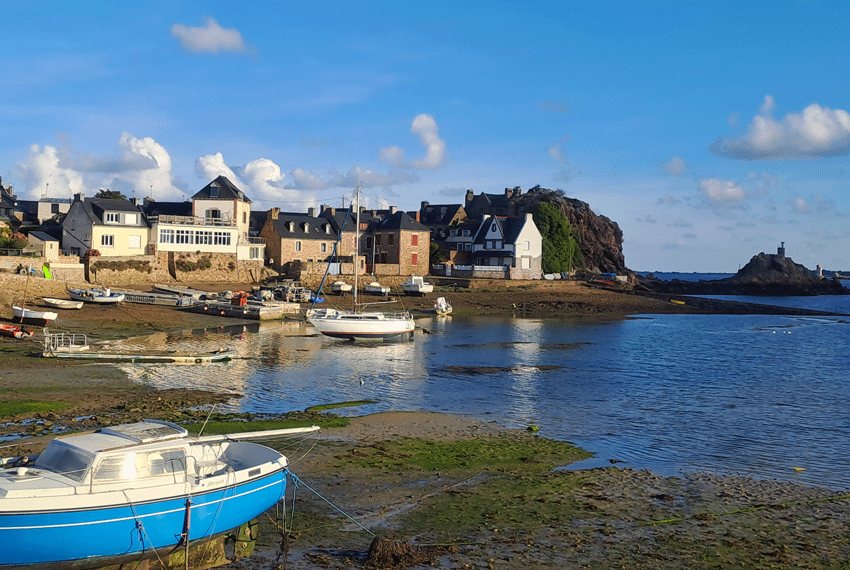
Planning a walking holiday in Brittany? This stunning region in northwestern France is not only a paradise for hikers but also a dream destination for food lovers. Known for its Breton cuisine, Brittany offers an irresistible mix of traditional dishes, fresh seafood, and local specialties like buckwheat galettes, sweet crêpes, and salted butter caramel. Add to that the charm of Breton cider, Cancale oysters, and scallops, and you have the perfect recipe for a gastronomic adventure. In this guide, we’ll explore the best of Brittany’s culinary heritage and show you why combining hiking and gastronomy in Brittany is an unforgettable experience.
The famous Breton galettes
Crêperies in Brittany are everywhere! From small family-run restaurants tucked down cobblestone streets, to large seafront terraces, crêperies are budget-friendly, simple, and delicious. They’re perfect for lunch or dinner on your self-guided walking tour in Brittany.
Galettes Bretonnes are savory pancakes made from buckwheat flour (also called “blé noir” or “sarrasin”), giving them a darker color and a slightly nutty flavor. Typical fillings include ham, cheese, eggs, mushrooms, or even seafood. The most classic version is the “galette complete” with ham, cheese, and egg. Expect crisp edges with a tender centre, the buckwheat adding an earthy depth.
Brittany’s soil and climate are ideal for buckwheat, introduced in the region around the 15th century. Wheat was harder to grow, so buckwheat became a staple—affordable and nutritious for rural communities. Today, Breton galettes are a symbol of Brittany’s gastronomy and attract food lovers from around the world. Festivals and markets often feature galette-making demonstrations, reinforcing their cultural importance.
Mouthwatering Breton crêpes
Crêpes are sweet pancakes made from wheat flour, lighter in color and texture than galettes. Popular toppings include sugar, butter, jam, chocolate, caramel, or the famous salted butter caramel (caramel au beurre salé). Fresh fruit and whipped cream are also common. It’s traditional to start with a savory galette and finish with a sweet crêpe, both paired with Breton cider served in a traditional bowl called a “bolée.”
Brittany: The land of salted butter
Brittany is famous for its salted butter, thanks to a historical quirk: In the Middle Ages, Brittany was exempt from the French salt tax (gabelle), so salt was abundant and used liberally in butter. This created a regional tradition unlike most of France, where unsalted butter dominates. The recipe for salted butter caramel was popularized in the late 20th century by Breton chefs and quickly became a signature flavor worldwide. Today, salted butter caramel is a symbol of Breton indulgence, found in crêpes, ice cream, chocolates, and jars sold in every Breton market. Don’t forget to take home a jar as a souvenir of your walking trip in Brittany!
The seafood of Brittany
With one of the longest coastlines in France, Brittany is surrounded by the Atlantic Ocean and the English Channel. Its nutrient-rich waters are ideal for shellfish such as mussels (moules), lobster (langouste), crab (crabe), and fish: monkfish, sea bass, and sardines. Brittany emphasizes sustainable fishing, ensuring freshness and quality.
Oysters from Cancale
Oysters from Cancale, on the Emerald Coast near Saint-Malo, are considered among the best in the world. Brittany’s coastline has strong tides, perfect for oyster farming. The mix of fresh and salt water creates a unique flavor profile: slightly salty, mineral-rich, and very fresh. Oyster tasting is a tradition in Brittany, often enjoyed raw with a squeeze of lemon and paired with cider or white wine. After your walk to Beauport Abbey, stop at the Arin oyster farm & bar for a seafood treat.
Scallops: A winter delicacy
Scallops (coquilles Saint-Jacques) are a winter delicacy, often served grilled or in creamy sauces. The fishing season runs from October to April and is strictly regulated to protect stock. Brittany scallops are prized for their sweetness and firm texture. Two fishing methods are used:
1. Dredging (dragage) where boats use metal dredges to scrape the seabed and collect scallops. This is the most common method but highly controlled to minimize environmental impact
2. Diving (plongée), more eco-friendly but labour intensive.
Cheers to a self-guided walking holiday in Brittany!
Breton cider is a deep-rooted tradition, produced for centuries thanks to Brittany’s apple-rich orchards and mild climate. It’s traditionally served in a bolée alongside galettes and crêpes. Breton cider is slightly sparkling, crisp, and refreshing, with moderate alcohol content (around 4–5%). There are three main types:
1. Cidre brut: dry, robust flavor
2. Cidre doux: sweet and fruity
3. Cidre fermier: farmhouse cider, artisanal and unfiltered
A Brittany walking trip full of flavour!
A self-guided walking holiday in Brittany is more than just scenic trails and coastal views; it’s a journey through one of France’s richest culinary landscapes. From savoring Breton galettes and crêpes in cozy crêperies to tasting fresh oysters from Cancale and enjoying a glass of traditional Breton cider, every step brings you closer to the authentic flavors of this unique region. Whether you’re drawn by the history of salted butter caramel, the allure of seafood markets, or the vibrant Breton food festivals, Brittany promises a feast for both the eyes and the palate. So, lace up your boots, pack your appetite, and discover why walking in Brittany is the ultimate way to experience Breton cuisine.
Recipe for salted butter caramel (Caramel au Beurre Salé)
Ingredients:
· 200 g granulated sugar
. 100 g salted butter (preferably Breton butter)
. 200 ml heavy cream
· In a heavy-bottomed saucepan, melt the sugar over medium heat without stirring (you can gently swirl the pan). Let it turn into a golden amber caramel.
. Add the butter
. Once the sugar is melted and golden, add the salted butter in chunks.
. Stir gently until fully incorporated
. Add the cream
. Warm the cream slightly (to avoid temperature shock).
. Slowly pour it into the caramel while stirring constantly.
. Be careful—this will bubble vigorously
. Cook for 1–2 minutes until smooth and glossy
. Cool & store
. Let it cool, then store in a jar. It will thicken as it cools
. Keeps for about 2 weeks in the fridge.
Recipe for scallops, Breton style
Ingredients (for 4 servings)
. 12 fresh scallops (cleaned, with or without shells)
. 2 shallots, finely chopped
. 50 g salted Breton butter
. 100 ml dry cider (or white wine)
. 100 ml heavy cream
. Fresh parsley, chopped
. Salt and freshly ground pepper
. Pat the scallops dry and season lightly with salt and pepper
. Sauté the shallots
. In a large skillet, melt the salted butter over medium heat
. Add shallots and cook until soft and translucent
. Increase heat slightly, add scallops and sear for about 1–2 minutes per side until golden but still tender.
. Remove scallops and keep warm
. Pour cider into the pan to deglaze, scraping up any browned bits
. Reduce slightly, then stir in cream and simmer until the sauce thickens
. Return scallops to the pan briefly to coat with sauce
. Sprinkle with fresh parsley and serve immediately with either a salad, a galette or crusty bread & a bolée of cider!